SEO for Car Dealerships: Rank Higher, Sell More Cars
Most car buyers start their search online. Not on the lot. According to Cox Automotive's market research, over 60% of car shoppers spend time researching online before ever visiting a dealership. SEO for car dealerships makes sure your dealership shows up when those buyers are searching.
If someone searches "used cars near me" or "Honda dealer [city]" and your dealership doesn't appear on the first page, you're losing sales to competitors who invested in their online presence.
Why Car Dealerships Need SEO
The automotive retail market has shifted dramatically online. Buyers research inventory, compare prices, read reviews, and narrow their choices to 1 or 2 dealerships before they ever walk through your door. If your website doesn't show up during that research phase, you never make the shortlist.
Most dealerships rely on third-party platforms like AutoTrader, Cars.com, and CarGurus. These platforms work. But they charge per lead, and your listing sits right next to every competitor. Your own website ranking on Google gives you leads with zero per-lead cost and no comparison shopping built in.
Car sales are also high-ticket transactions. The gross profit on a single vehicle sale can range from $1,500 to $5,000+. That means one extra sale per month from organic search easily covers a full year of SEO investment.
What Car Dealership SEO Actually Includes
SEO for car dealerships requires a multi-pronged approach because of the unique inventory-driven nature of the business:
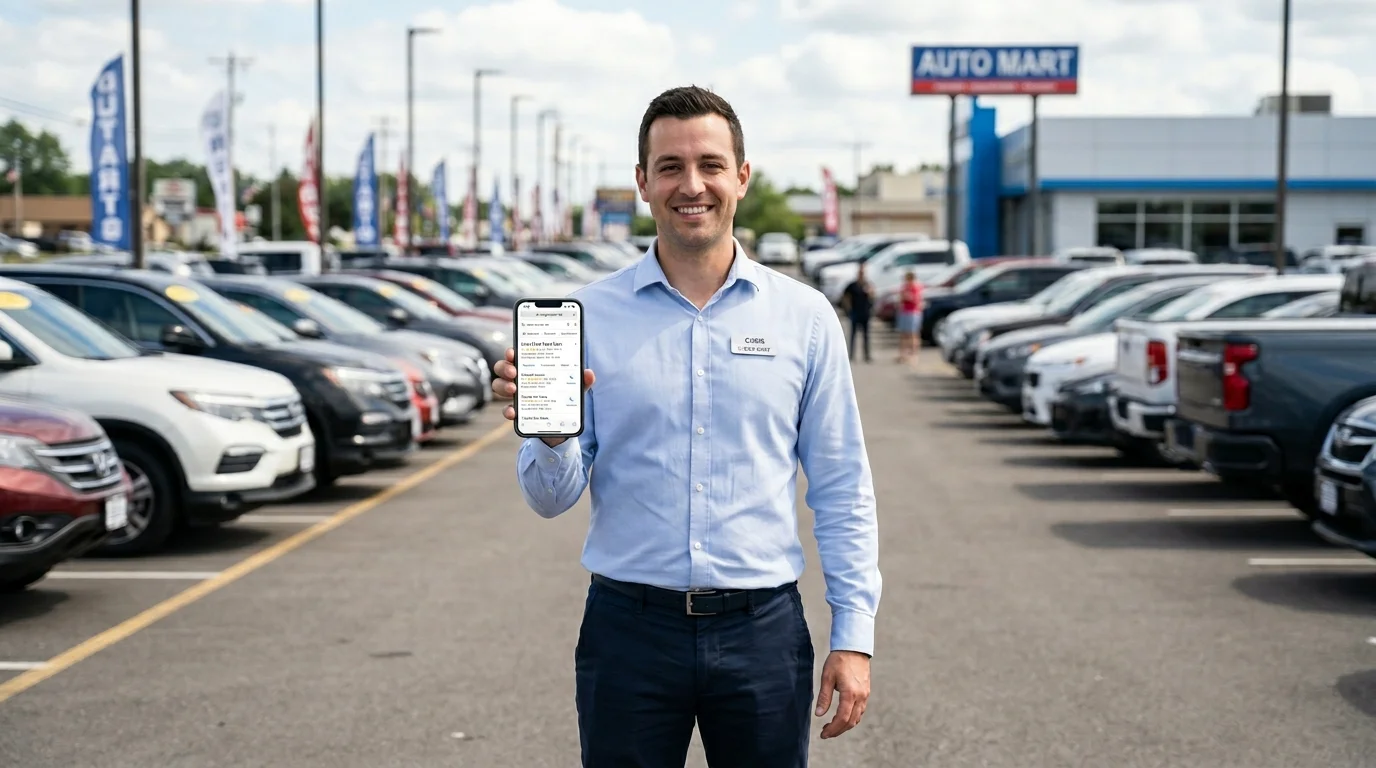
- Google Business Profile optimization: Your GBP listing is critical for "dealership near me" searches. Complete profiles with accurate inventory categories, photos of your lot and showroom, and regular posts about new arrivals drive Map Pack visibility.
- Inventory page optimization: Each vehicle category page (used cars, certified pre-owned, specific makes/models) needs proper title tags, descriptions, and structured data. Schema markup for vehicles helps Google understand and display your inventory in search results.
- Local keyword targeting: Targeting the searches buyers actually use: "[make] dealer [city]," "used cars near [area]," "certified pre-owned [make] [city]." Each combination is a potential customer you can capture.
- Review management: Dealership reviews heavily influence buyer decisions. According to BrightLocal's consumer survey, 87% of consumers read reviews for local businesses. A consistent stream of positive reviews boosts both rankings and conversion rates.
- Technical performance: Dealership websites are often heavy with images and inventory plugins that slow page load times. Google's page experience signals penalize slow sites. Fast, mobile-friendly sites keep potential buyers engaged.
- Content for the buyer journey: Pages answering common questions: "Is it better to buy new or used?" "What credit score do you need to finance a car?" "Best family SUVs under $35K." This content captures buyers early in their research phase.
"The shift in automotive is clear: buyers do 80% of their research before they ever step foot on a lot. If your dealership isn't visible during that research phase, you're not even in the consideration set."
Greg Sterling, Co-founder (Source: Near Media)
What Industry Benchmarks Show for Dealership SEO
Car dealerships that invest in SEO typically see:
- Improved Google Map Pack visibility within 8 to 12 weeks
- 50 to 200% increase in organic website traffic within 6 months
- More phone calls and direction requests from Google Business Profile
- Reduced cost-per-lead compared to third-party listing platforms
The key advantage of SEO for car dealerships over paid channels is compounding returns. Ad spend stops working the day you stop paying. SEO builds an asset. Your website's authority, that continues generating leads month after month.
The ROI Math: Why Car Dealership SEO Pays for Itself
Let's run the numbers. The average new car sale generates $1,500 to $3,000 in front-end gross profit. Used vehicles often carry higher margins, with $2,500 to $5,000+ per unit being common. If SEO brings your dealership 5 additional qualified leads per month and you close 2 of them, that's $3,000 to $10,000 in gross profit per month from organic search alone.
Now factor in the service department. A customer who buys from you is likely to return for maintenance, tires, and warranty work. The lifetime value of a single vehicle buyer, including service revenue, can reach $30,000 to $50,000+ over 5 years. Compare that to your SEO investment of $1,000 to $3,000 per month. Even one sale per month from organic search delivers a 10x+ return.
Third-party listing platforms charge $500 to $2,000+ per month and you share every lead with competing dealers. SEO builds an asset you own. The leads are exclusive, there is no per-lead fee, and the value compounds as your website gains authority over time.
Common Mistakes Car Dealerships Make With SEO
Relying solely on Cars.com and AutoTrader
Third-party platforms are useful, but they are rented ground. You pay monthly, compete directly with every other dealer in your market, and the moment you stop paying, your listings disappear. Your own website ranking on Google gives you leads with no per-lead cost and no comparison shopping built into the page. The strongest dealerships use listing platforms as a supplement, not a foundation.
No service department pages
Service departments generate recurring revenue and bring customers back for their next vehicle purchase. Yet most dealership websites bury service information in a single page or skip it entirely. Dedicated pages for oil changes, brake service, tire rotation, and warranty work capture high-intent "near me" searches from customers who need service today. These searches convert faster than vehicle sales searches.
Ignoring used inventory keywords
"Used cars near me" and "pre-owned [make] [city]" searches have massive volume and strong buying intent. Many dealerships focus all their SEO on new inventory while leaving used vehicle keywords to competitors and listing platforms. Create category pages for popular used makes and models with proper title tags and descriptions. This is especially important for independent dealers who depend entirely on used vehicle sales.
One generic inventory page instead of segmented categories
A single "View Our Inventory" page trying to rank for every make, model, and body type ranks for none of them. Create segmented pages: used SUVs, certified pre-owned sedans, trucks under $25K. Each category targets distinct search queries and gives Google specific content to index.
DIY vs. Hiring: What You Can Do Yourself
Some dealership SEO tasks are straightforward and free. Others require specialized knowledge. Here's an honest breakdown:
Do it yourself (free):
- Claim and fully complete your Google Business Profile. Add photos of your showroom, lot, and happy customers picking up their vehicles.
- Respond to every Google review within 24 hours. Thank positive reviewers by name and address negative reviews professionally.
- Post new inventory arrivals, promotions, and service specials to your GBP weekly.
- Make sure every vehicle on your website has a proper title, description, and photos. This is basic but many dealers skip it.
Hire a professional for:
- Technical audits of your dealer management system (DMS) integration and how it impacts page speed and indexing
- Vehicle schema markup implementation so Google can display rich results for your inventory
- Building city-specific and make-specific landing pages optimized for local search
- Keyword strategy that covers sales, service, parts, and financing searches
- Competitive analysis to find keyword gaps other dealers in your market aren't covering
The DIY tasks will improve your Map Pack visibility. But if competing dealerships in your market are already investing in SEO, professional help is what gets you past them. Learn more about what professional SEO costs and how we approach it.
How to Choose an SEO Provider for Your Dealership
Automotive SEO has unique challenges that generic agencies miss. Here's what to look for:
- They audit before they pitch. Any provider who proposes a plan before analyzing your site, inventory structure, and competitive landscape is guessing. A real partner runs an SEO audit first and shows you the data.
- They understand automotive search patterns. Car shopping is seasonal (tax refund season, end-of-model-year). Inventory turns over constantly. Your SEO provider needs to understand how to handle pages for vehicles that sell and new ones that arrive weekly.
- They know your tech stack. Dealership websites often run on platforms like Dealer.com, DealerSocket, or CDK. Your SEO provider should understand how these platforms handle indexing, page speed, and URL structures.
- They don't guarantee #1 rankings. No one controls Google's algorithm. Anyone promising guaranteed rankings is either lying or using tactics that will hurt your site long-term.
- They publish their pricing. If you can't get a straight answer on cost before a sales call, move on. We publish ours.
Frequently Asked Questions
How much does SEO cost for a car dealership?
Dealership SEO typically costs between $1,000 and $3,000 per month depending on market size and inventory scope. Given that the average car sale generates $1,500 to $3,000 in gross profit, even one additional sale per month from organic search makes SEO profitable.
How long does dealership SEO take to work?
Most dealerships start seeing improvements in local visibility within 2 to 3 months. Competitive inventory keywords like "used cars [city]" typically take 4 to 8 months to rank for, depending on your market size and existing online presence.
Do car dealerships really need SEO if they already use AutoTrader and Cars.com?
Yes. Third-party listing sites charge per lead and you compete directly with every other dealer. Your own website ranking on Google gives you leads you own, with no per-lead fees and no side-by-side competitor comparisons. The best dealerships use both channels but invest in SEO to reduce dependency on paid listings.
Should dealerships do separate SEO for new and used inventory?
Yes. New and used vehicle searches have different keyword patterns, different buyer intent, and different competition levels. "New Honda Civic [city]" targets a different shopper than "used cars under 20K near me." Each needs its own pages and keyword strategy. Certified pre-owned is a third category worth targeting separately because it carries its own search volume.
How important is the service department for dealership SEO?
Very important. Service searches ("oil change near me," "brake repair [city]") drive consistent, year-round traffic with high conversion rates. Service customers also become future vehicle buyers. A strong service SEO strategy creates a pipeline that feeds both immediate revenue and long-term sales.
New to SEO? Start with our local SEO guide or see what SEO actually costs.
Sources and References
- Cox Automotive. (2025). Market Insights. coxautoinc.com
- Google. (2025). Page Experience Documentation. developers.google.com
Voxel Phase helps car dealerships get found on Google through local SEO audits, SEO-optimized websites, and content that ranks. Plans start at $588/month. Get your free SEO audit. We'll show you exactly where your dealership stands in local search.