
SEO for Doctors: Why Your Practice Is Invisible Online
You spent $5,000–$15,000 on a website. It has professional photos, your credentials, a list of services. It looks great on your phone. And when someone in your city searches "allergist near me" or "dermatologist in San Mateo," your practice is nowhere on the first page. SEO for doctors fixes that, and it starts with understanding why your site is invisible.
This is the reality for most medical practices. Your website was designed to look professional. Not to rank on Google. The company that built it understood healthcare branding. They did not understand search.
SEO for doctors is not mysterious. It follows specific, repeatable steps. This article covers every one of them: what to fix, in what order, and why each piece matters for getting patients to find you before they find your competitor down the street.
Why Most Doctors' Websites Fail at SEO
Healthcare web design is its own little industry. Companies like DoctorLogic, Officite, and dozens of regional shops build sites for practices every day. They handle HIPAA compliance, patient portals, and intake forms. What they typically do not handle: search engine optimization.
The result is a site with no keyword strategy, no optimized title tags, no internal linking, no schema markup, no local signals, and page speeds that make Google wince. It's a digital business card. Not a patient acquisition tool.
A full SEO audit for a local business typically uncovers around 40-50 technical issues per site. Medical practice websites tend to score worse than average because they're built on rigid templates by designers who have never opened Google Search Console.
The good news: fixing these problems is straightforward when you know what to look for. If your practice website isn't appearing in search results at all, start with our guide on why websites don't show up on Google, then come back here for the medical-specific strategies.
Healthcare websites fall under what Google calls YMYL (Your Money or Your Life) content, topics that can directly affect someone's health, finances, or safety. Google holds these pages to a higher standard. As Lily Ray, VP of SEO at Amsive Digital, described in a podcast on E-A-T and YMYL: healthcare clients saw "incredible SEO growth" until Google's Medic update rolled out in August 2018, which hit YMYL sites that lacked proper expertise signals harder than any other category. The lesson: medical websites can't skip the trust signals.
1. SEO for Doctors Starts With Your Google Business Profile
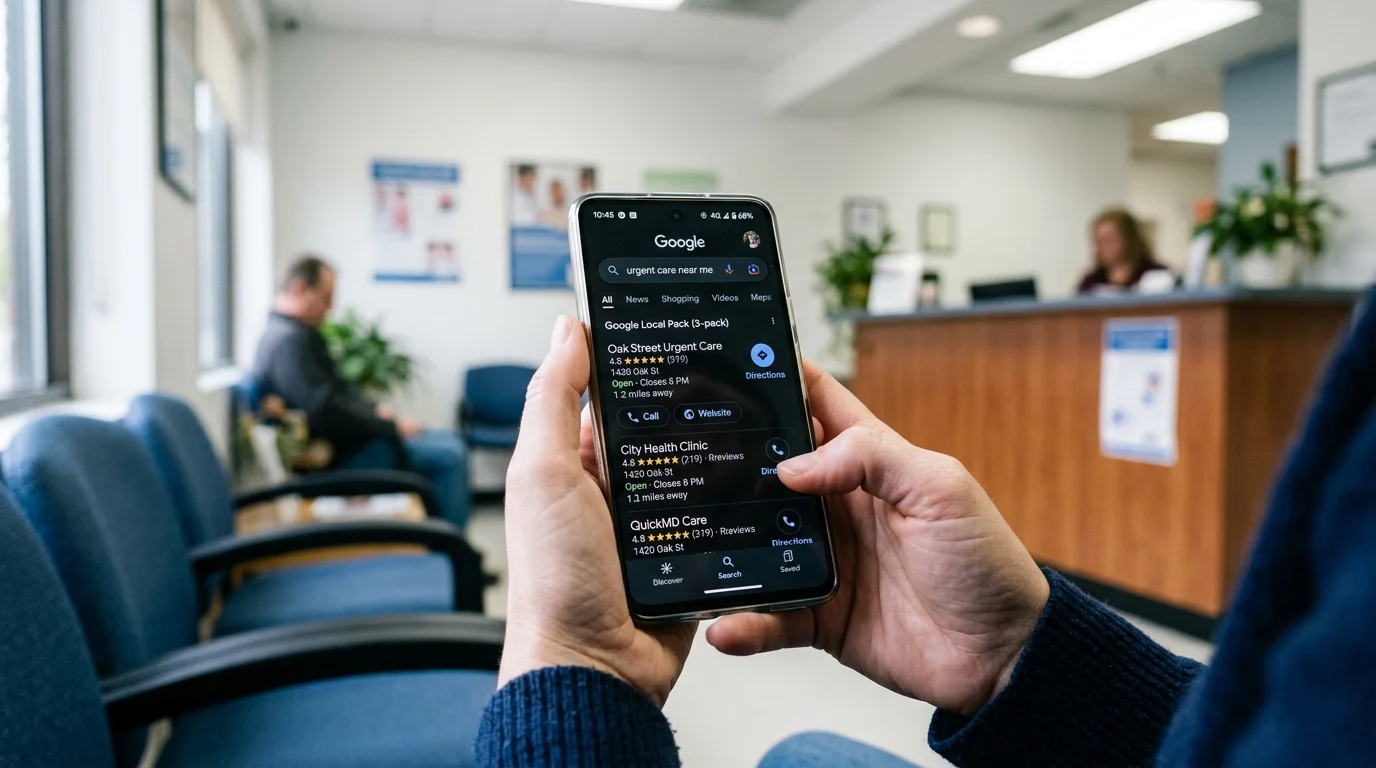
If you do nothing else on this list, do this one. Your Google Business Profile is the single most important factor in whether you appear in the Map Pack. Those three local listings at the top of search results that capture over 40% of all local clicks.
According to BrightLocal's research, 70% of local business GBP profiles are incomplete. For medical practices, that number may be higher. Most doctors filled it out once during setup and never touched it again.
Here's what a fully optimized medical GBP looks like:
- Primary category: Choose the most specific option. "Allergist" is better than "Doctor." "Dermatologist" is better than "Medical Clinic." According to Whitespark's Local Search Ranking Factors study, primary category is consistently the top-weighted Google Business Profile signal. Darren Shaw, founder of Whitespark, has noted that failing to set your primary category precisely, choosing "law firm" instead of "criminal defense attorney," for example, means "you absolutely are failing" at local SEO.
- Secondary categories: Add every relevant one. If you're a dermatologist who also does cosmetic procedures, add both. You can have up to 10 categories.
- Photos: Upload at least 10–15 photos. Exterior shots, interior shots, exam rooms, staff photos. Profiles with photos get 42% more direction requests. Google has said this directly.
- Google Posts: Publish weekly. Share health tips, office updates, new services, seasonal content (flu shot season, allergy season). This signals to Google that your profile is active and maintained.
- Q&A section: Seed your own questions. "Do you accept Blue Cross?" "Is parking available?" "Do I need a referral?" Answer them yourself before random people answer them for you.
- Services and insurance: Fill in every service you offer. Add insurance providers. Google uses this information to match you to relevant searches.
GBP optimization alone can increase phone calls by 35–50%. It's also the fastest to show results. Most practices see changes within 4–8 weeks.
2. Target the Keywords Your Patients Actually Search
A critical part of SEO for doctors is understanding that patients don't use clinical language. You think "rhinoplasty," but they search "nose job near me." You write "atopic dermatitis," but they search "eczema treatment."
Medical SEO keyword research means finding the gap between how you describe your services and how patients search for them. The highest-value keywords for most practices follow these patterns:
- Specialty + city: "pediatrician San Jose," "cardiologist Oakland," "allergist San Mateo"
- Condition + treatment: "plantar fasciitis treatment," "sleep apnea doctor"
- "Best" + specialty + "near me": "best dermatologist near me," "best ENT doctor Bay Area"
- Insurance + specialty: "allergist that accepts Aetna," "dentist that takes Medi-Cal"
- Symptom-based searches: "why does my knee hurt when I walk," "rash that won't go away"
Each of these keyword types maps to a different page on your website. Specialty keywords go on your homepage and main service page. Condition keywords become individual condition pages. Symptom-based searches become blog content. We cover this in our content creation approach.
3. Build a Review Strategy That Doesn't Feel Pushy
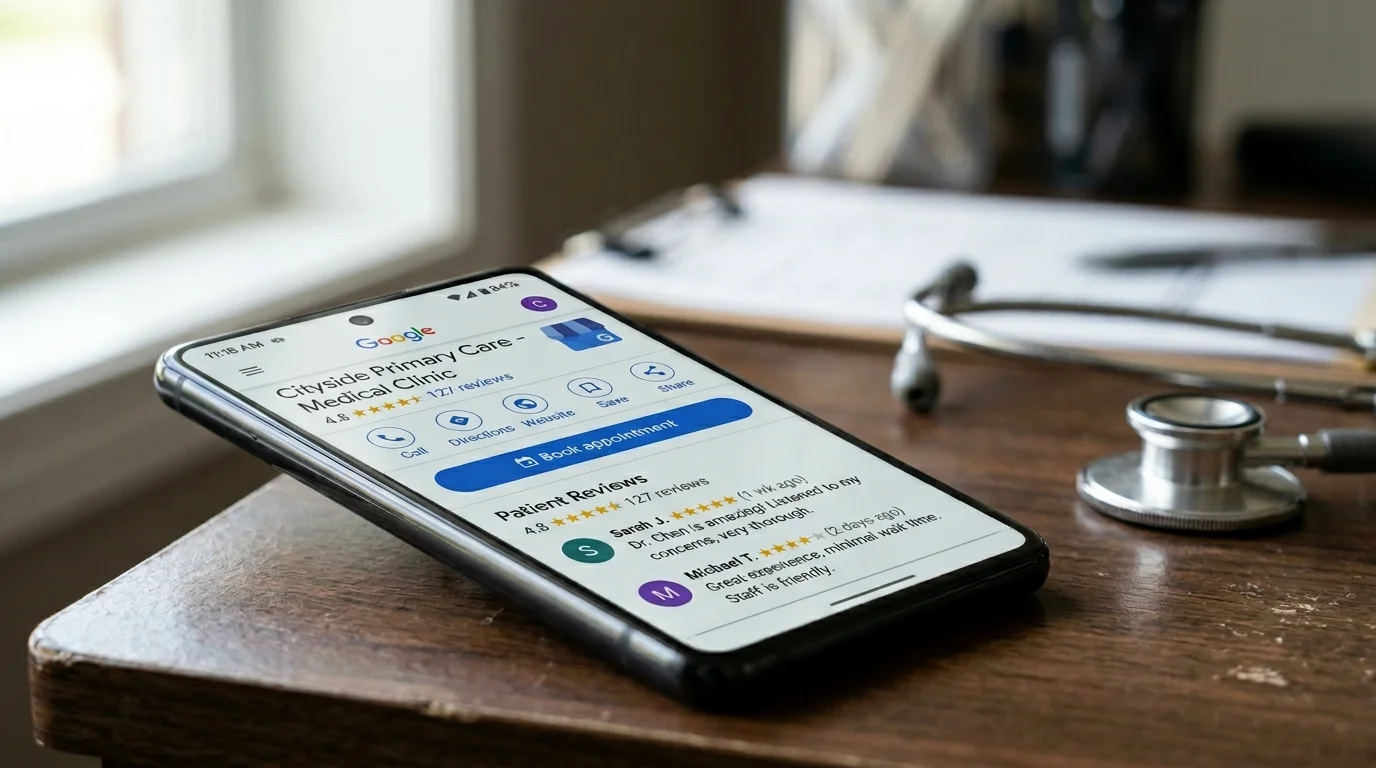
Google reviews directly affect your Map Pack ranking. Practices with more reviews and higher average ratings show up higher. It's that straightforward.
But doctors face a real tension here. You don't want to pressure patients. You don't want it to feel transactional. And you definitely don't want to violate any medical board guidelines about soliciting testimonials.
Here's what works without being aggressive:
- Ask at the right moment. After a successful follow-up visit. Not during the first appointment and not when delivering difficult news. Timing matters more than the ask itself.
- Use a simple follow-up system. A text message or email 2–4 hours after their appointment with a direct link to your Google review page. One message, one link, no nagging.
- Make it easy. Generate your Google review short link (search "Google review link generator") and put it everywhere, follow-up emails, appointment reminders, even a small card at checkout.
- Respond to every review. Thank positive reviewers briefly. Address negative reviews professionally and move the conversation offline. Google rewards active engagement with reviews.
- Never offer incentives for reviews. No discounts. No gift cards. Google's guidelines prohibit this, and it can get your profile penalized.
Most practices can go from 15 reviews to 50+ within 3–4 months just by asking consistently. The difference in ranking visibility between 15 reviews and 50 reviews is significant.
4. Fix the Technical SEO Problems Killing Your Rankings
No SEO strategy for doctors works if the technical foundation is broken. Medical practice websites have a unique set of issues beyond the usual problems.
Speed and Mobile Performance
Google uses page speed as a ranking factor. Most medical websites load slowly because they're built on bloated templates with uncompressed images, too many scripts, and hosting that was chosen by the web design company (who got a referral fee, not because it was fast).
Target: under 3 seconds load time on mobile. Test yours at PageSpeed Insights. If you're above 3 seconds, that's a fixable problem.
HIPAA Considerations for Web Forms
If your website has contact forms, appointment request forms, or any place a patient might enter health information, those forms need to transmit data securely. Standard WordPress contact forms don't cut it.
This doesn't mean your entire website needs to be HIPAA-compliant. It means: use HTTPS (mandatory anyway), make sure form submissions go through encrypted channels, and don't store patient health information in your website's database. Work with your compliance officer on specifics.
Mobile-First Design
According to Google's helpful content guidelines, over 60% of healthcare searches happen on mobile. Google indexes your mobile site first, the desktop version is secondary. If your site is hard to use on a phone (tiny buttons, text too small, menus that don't work), your rankings will suffer regardless of how good your content is.
5. Build Local Citations on Medical Directories
Local SEO for doctors depends heavily on citations, mentions of your practice's name, address, and phone number (NAP) across the internet. Google uses these to verify that your practice is real and that your information is accurate.
For doctors, the most important citation sources are industry-specific:
- Healthgrades: Claim and complete your profile. Add photos, update specialties, respond to reviews.
- Zocdoc: If you accept online booking, this is worth the investment. It's also a strong citation signal.
- Vitals: Claim your profile and verify accuracy.
- WebMD Physician Directory: Often auto-generated. Claim it and correct any errors.
- Yelp: Yes, still matters for local SEO. Claim, complete, and respond to reviews.
- Your state medical board listing: Make sure the address matches your GBP exactly.
- Hospital/health system directories: If you have affiliations, make sure those listings are current.
The critical rule: your name, address, and phone number must be identical everywhere. "123 Main St" and "123 Main Street" count as inconsistencies to Google. Audit every listing and standardize.
6. Create Content That Answers Patient Questions
Content is where SEO for doctors gets a real competitive edge. Physicians are sitting on an unfair content advantage and almost none of them use it. You have deep expertise in conditions, treatments, and patient concerns that people search for every day.
The content strategy for a medical practice should include three types of pages:
Condition Pages
One page per condition you treat. "Plantar Fasciitis Treatment in San Jose." "Eczema Treatment for Children, Bay Area Dermatologist." Each page targets a specific condition + location keyword and explains your approach to treating it.
Treatment/Procedure Pages
Separate from condition pages. "Allergy Testing: What to Expect." "PRP Injection Therapy." These target patients who already know what treatment they want and are looking for a provider.
Blog Content Targeting Patient Questions
"How long does allergy testing take?" "Can I exercise with plantar fasciitis?" "What's the difference between an allergist and an immunologist?" Each of these is a real search query. Each one is an opportunity to appear in Google's "People Also Ask" section and bring a potential patient to your site.
Publish 2–4 articles per month. Focus on questions your patients actually ask you during appointments. Those are the same questions they're typing into Google before they book.
7. Add Medical Schema Markup to Your Website
Schema markup is code you add to your website that tells Google exactly what your practice is, where it's located, what services you offer, and who your physicians are. Think of it as a structured data sheet that Google can read instantly instead of guessing from your page content.
For medical practices, the relevant schema types are:
- MedicalBusiness: Your practice type, address, hours, accepted insurance
- Physician: Individual doctor profiles with credentials, specialties, affiliations
- MedicalCondition: On condition pages, linking condition names to standardized medical terminology
- FAQPage: On any page with an FAQ section (helps you appear in Google's FAQ rich results)
This is a technical task. Your web developer or SEO agency handles it. But it's worth asking about because it gives you a real edge. Most medical practice websites have zero schema markup, which means adding it puts you ahead of nearly every local competitor.
"Especially for medical topics, anything that's a little more critical, I would also keep in mind everything around the E-A-T, the expertise, authoritativeness, and trustworthiness. Make sure that the site you're providing represents a really high standard, and that the content is of really high quality and put together by people who understand what they're doing."
- John Mueller, Search Advocate, Google (source)
8. Understand the ROI of SEO for Doctors
Here's the math that makes healthcare SEO a straightforward investment decision.
Industry benchmarks suggest that SEO delivers new patients at $40–60 each. Traditional advertising, print, radio, direct mail, runs $150–250 per new patient. That's a 3–4x difference in acquisition cost.
But the real advantage is compounding. A print ad stops working the day you stop paying. A page that ranks on Google for "allergist San Mateo" sends you patients next month, and the month after that, and next year, with no additional spend on that keyword.
For a typical specialist practice, one new patient per month from SEO covers the cost of the entire program. Everything beyond that is margin.
Compare that to buying Google Ads for medical keywords, where clicks run $8–25 each and you need 10–15 clicks per booked appointment. The math on paid ads works too. But it never compounds. SEO builds an asset. Ads rent attention.
Where to Start With SEO for Your Medical Practice
If your practice has done zero SEO work, here's the priority sequence we recommend:
- Claim and fully optimize your Google Business Profile. Biggest impact, fastest results.
- Get a technical SEO audit. Find out what's broken before you start building. Here's what ours covers.
- Fix critical technical issues. Page speed, mobile usability, broken links, missing title tags.
- Build out condition and treatment pages. One page per condition, keyword-targeted.
- Start a review generation system. Consistent, ethical, automated follow-up.
- Claim and standardize local citations. Healthgrades, Zocdoc, Vitals, Yelp.
- Add schema markup. MedicalBusiness and Physician at minimum.
- Begin regular content publishing. 2–4 blog posts per month targeting patient questions.
Steps 1–3 should happen in the first month. Steps 4–8 build over months 2–6. By month 6, most practices see measurable ranking improvements and a steady increase in patient inquiries from search.
If your website itself needs rebuilding to support these SEO improvements, our website building service handles the technical foundation so your SEO has room to work.
If you want to automate the repetitive parts, review request emails, GBP posting, content distribution, that saves your staff 5–10 hours per month and keeps everything running consistently.
Frequently Asked Questions
How much does SEO cost for a medical practice?
Typically $500–$1,500 per month depending on scope and competition in your market. Voxel Phase plans start at $588/mo. For most practices, one additional new patient per month covers the cost of SEO entirely.
How long does medical SEO take to work?
Expect 3–6 months for meaningful ranking improvements on your website. Google Business Profile optimization often shows results faster, within 4–8 weeks, because GBP changes affect your Map Pack visibility almost immediately.
Is SEO worth it for a small practice?
Yes. Industry benchmarks suggest SEO delivers patients at $40–60 each vs. $150–250 for traditional advertising. Unlike ads, SEO compounds over time. The content and rankings you build today keep working for you next year without additional spend.
Can I do SEO myself as a doctor?
Technically, yes. But your time is worth more seeing patients. SEO involves ongoing technical optimization, content production, citation management, and review strategy, work that takes 10–15 hours per month to do properly. That's why most practices hand it off.
What's the most important SEO factor for doctors?
Your Google Business Profile. It's the fastest win and directly controls whether you appear in the Map Pack. The three local listings at the top of search results that capture over 40% of local clicks.
Sources and References
- Google. (2025). Creating Helpful Content. developers.google.com
- Google. (2025). Creating Helpful Content. developers.google.com
- Schema.org. MedicalBusiness Schema. schema.org
Get a Free SEO Audit for Your Practice
We'll analyze your website, your Google Business Profile, and your local search visibility before we even get on a call. When we talk, we'll be looking at real data about your specific practice. Not a generic sales deck.
Request your free audit here. It takes 30 seconds and there's no commitment.
Voxel Phase provides SEO audits, content strategy for medical practices in San Francisco, the Bay Area, and across California. See our pricing.